Showing posts with label My Life. Show all posts

Monday, November 28, 2011

"Look at that subtle off-white coloring. The tasteful thickness of it. It even has a watermark. "


So the irony of the situation is this:

a. I just finished reading The Great Gatsby last night.
b. It is far too late for me to still be up reading blogs, but here I am.
c. I was literally just getting ready to close up the 'ole macbook when whaBAM, I came across the coolest art that I've found in a while.

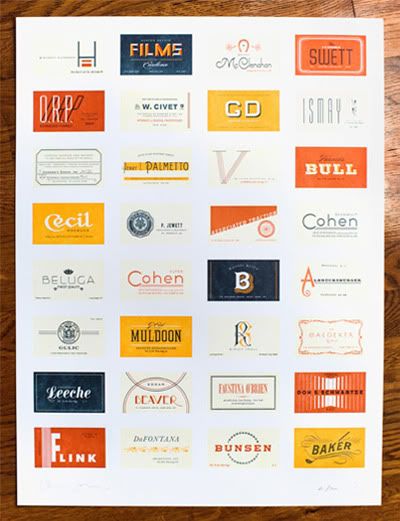
Christmas wish list item numero uno - The Heads of State Great Gatsby "Business Card" Poster Print


Its description according to the site:

"Chapter four of F. Scott Fitzgerald's The Great Gatsby reads like a VIP guest list of the Jazz Age. Taking inspiration from those pages, this poster is comprised of the business cards and personal stationery of the movers and shakers that attended Gatsby's parties in the summer of 1922."

And sure enough, pp. 61-63

"From East Egg, then, came the Chester Beckers and the Leeches, and a man named Bunsen, whom I knew at Yale, and Doctor Webster Civet, who was drowned last summer up in Maine...From West Egg came the Poles and the Mulreadys and Cecil Roebuck and Cecil Schoen and Gulick the state senator and Newton Orchid, who controlled Films Par Excellence...Benny McClenahan always arrived with four girls...I have forgotten their names...and their last names were either the melodious names of flowers and months or the sterner ones of the great American capitalists whose cousins, if pressed, they would confess themselves to be...


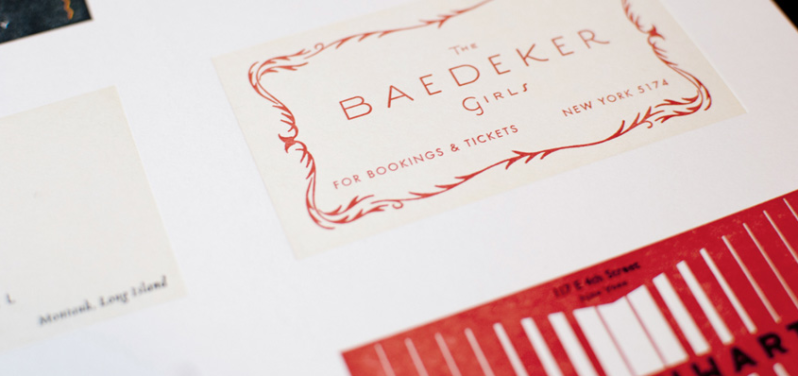
...In addition to all these I can remember that Faustina O'Brien came there at least once and the Baedecker girls and young Brewer who had his nose shot off in the war."


Oh, and I mustn't forget the lovely Miss Golf Pro Herself...


I WANT.

[Btw, the title quote is Patrick Bateman on business cards in case you were stumped.]

Sunday, September 25, 2011

little fig.

Tuesday, September 13, 2011

Familial Conversation.

INT. FAMILY KITCHEN. AFTERNOON.

A GIRL is sitting at the kitchen table eating lunch while her FATHER is bustling about grabbing at her deli chicken and potato chips.

GIRL: Wait, so what course are you going to again?

FATHER: It's a course on concealed...[pauses and mumbles something inaudible]

GIRL: Wait, what was that?

FATHER: A course on carryingconcealedfirearms.

He walks out of the kitchen and down the hall.

GIRL: [pause and then calling after him] Uhh, you know that's not legal in our state, Dad.

FATHER: I know it's not. It's only illegal in two states: Wisconsin and Illinois, thanks to our dumb governor.

She takes a bite and laughs.

GIRL: We should move.

Monday, September 12, 2011

"Like heath that, in the wilderness, the wild wind whirls away."

I very much liked this outfit.
Going for pizza at Pino's with Alex tonight.
Today we decided that we want to have a dog some day and name him/her Pilot, like Mr. Rochester's dog in Jane Eyre.


Title: "Fallen is Thy Throne"
A poem by Sir Thomas Moore

Quoted pp. 131 Jane Eyre

Thursday, July 7, 2011

Below My Feet

Alex posted this new M&S song on my Facebook last week, and since then I've listened to it, but I hadn't really listened to it...if you know what I mean.

The lyrics are sincere and spiritual. I need to be asking God of the same things more often I think.

[I'm emotional tonight.]

Excellent news though; my sister Erika and brother in law Philip are in town for a few days, and we're going to New Glarus, WI tomorrow to go to the brewery! They also get to see the show on Sunday night along with my other sister Alyssa, all of my extended family, and a couple friends from work.

Life is so good, and I'm so blessed.


"You were cold as the blood through your bones
And the light which led us from our chosen homes
Well I was lost

And now I sleep
Sleep the hours and that I don't weep
When all I knew was steeped in blackened holes
I was lost

Keep the earth below my feet
For all my sweat, my blood runs weak
Let me learn from where I have been
Keep my eyes to serve and hands to learn

So I was still
I was under your spell
When I was told by Jesus all was well
So all must be well

Just give me time
You know your desires and mine
Wrap my flesh in ivory and in twine
For I must be well

Keep the earth below my feet
For all my sweat, my blood runs weak
Let me learn from where I have been
So keep my eyes to serve, my hands to learn
Well keep my eyes to serve, my hands to learn

Keep the earth below my feet
For all my sweat, my blood runs weak
Let me learn from where I have been
Keep my eyes to serve, my hands to learn
Keep my eyes to serve, my hands to learn."

Wednesday, July 6, 2011

Phantom.

I have had the pleasure of performing as Meg Giry in a production of Phantom of the Opera at Rock Valley College's Starlight Theater this summer, and in honor of our second and last run (starting Wednesday, July 6th!), I wanted to blog about some of the intellectual morsels I've discovered in my research concerning the story and its general history.

. . . . . . . . . . . . . . . . . . . . . . . . . . . . . . . . .

"Overture"


. . . . . . . . . . . . . . . . . . . . . . . . . . . . . . . . .


"Who is this angel, this angel of music..."

To begin, I'll say that the musical is only a semblance of the book by French author Gaston Leroux. I read the latter during rehearsals, and despite its differences, the novel's sinister ambiance - the rat-strewn cellars of the Paris Opera, mid-19th century - stirred a fearful curiosity I've learned to use in the show.


The novel concentrates much less on the musical's "pre-opera diva" protagonist Christine and much more on the attempts of her wealthy suitor Raul to apprehend the opera's "Phantom," a deformed man named Erik who kidnaps Christine after her first performance as lead. Raul is approached by an ambiguous character called "the Persian" who lives in the bowels of the opera house and associates himself with Erik through their shared time in India, the personal knowledge of whom he knows will help Raul in his efforts to save Christine.

Totally absent from the stage production (and regretfully so, I must say), the Persian offers narrative insight into Erik's troubled past and the malevolent motivation behind his gruesome actions. Entire chapters are devoted to the Persian's accounts, the most important being his explanation of their acquaintance. Erik, commissioned by a czar in India to build an architecturally elaborate palace impenetrable by the czar's enemies, is suspected of potential treason as he is the only person who could navigate an enemy through the palace's many labyrinths. Paranoia causes the czar to want his architect executed, so he employs the Persian to complete the task. However the Persian, similar to the huntsman in Snow White's tale, takes pity on his victim and fakes the execution, exiling him to Paris and thus saving his life.

And here is where the plot of the musical begins. At the beginning of the show, all we know of the deformed Phantom is that he is gifted as both musician and architect and that he has become perversely obsessed with a young opera singer, so much so that he pretends to be the spirit of her deceased father and commits violent crimes to obtain her love. We only see how his physical insecurities and deranged desire for ultimate power over Christine drive him to insanity; nothing is ever said of what he's endured in the past.

To be honest, the book was somewhat dry at times, and the musical is absolutely beautiful and redemptive in its depiction of Christine's forgiving relationship with the Phantom. But I'm grateful to have learned some historical (be it fictional) background into the Phantom's troubled psyche.

I also learned from the novel that the underground labyrinths and lakes of the Paris Opera actually exist! They were built as an anti-irrigation system so that the opera wouldn't flood and were also used as a sort of "underground railroad" during the Revolution.

. . . . . . . . . . . . . . . . . . . . . . . . . . . . . . . . .

"Andre, please don't shout. It's publicity, and the take is vast. Free publicity!"
"But we have no cast..."


My fellow castmates Erin and Megan also contributed to my interest in Phantom trivia. Erin brought a book called The Complete Phantom of the Opera to a rehearsal one night, and I must have spent at least an hour flipping through the history of the tale in all of its forms: literature, film, television, and stage theater. The best part was the book's inclusion of artwork: the early illustrations of Joseph Hope Williams, vintage movie advertisements/photo-clips from different film versions including Rupert Julian's 1925 silent adaptation with Lon Chaney, and Degas-inspired paintings done by Robert Heindel that capture different scenes from the original musical in London.


Joseph Hope Williams


Rupert Julian's 1925 version


Arthur Lubin's 1943 version


"I'm Here, I'm Here, I'm Here"--Robert Heindel


"The End of Innocence"


"Phantom Dancers" [My personal favorite, as my character Meg is one of the ballerinas ;]


"Sarah and Michael, Music of the Night"


"The Phantom, Michael Crawford"


"The Phantom of the Opera"


"The Phantom, Michael Crawford"


. . . . . . . . . . . . . . . . . . . . . . . . . . . . . . . . .


"Why so silent, good messieurs? Did you think that I had left you for good..."


Megan introduced me to the idea that the short story "The Masque of the Red Death" by Edgar Allen Poe may very well have inspired the costuming and overall feeling of peril adopted by Andrew Lloyd Webber for the first scene of the musical's second act, "Masquerade."

Here's an excerpt I found especially befitting:

"It was in this apartment, also, that there stood against the western wall, a gigantic clock of ebony. Its pendulum swung to and fro with a dull, heavy, monotonous clang; and when the minute-hand made the circuit of the face, and the hour was to be stricken, there came from the brazen lungs of the clock a sound which was clear and loud and deep and exceedingly musical, but of so peculiar a note and emphasis that, at each lapse of an hour, the musicians of the orchestra were constrained to pause, momentarily, in their performance, to hearken to the sound; and thus the waltzers perforce ceased their evolutions; and there was a brief disconcert of the whole gay company; and, while the chimes of the clock yet rang, it was observed that the giddiest grew pale, and the more aged and sedate passed their hands over their brows as if in confused reverie or meditation. But when the echoes had fully ceased, a light laughter at once pervaded the assembly; the musicians looked at each other and smiled as if at their own nervousness and folly, and made whispering vows, each to the other, that the next chiming of the clock should produce in them no similar emotion; and then, after the lapse of sixty minutes,

(which embraces three thousand and six hundred seconds of the Time that flies,)

there came yet another chiming of the clock, and then were the same disconcert and tremulousness and meditation as before."


. . . . . . . . . . . . . . . . . . . . . . . . . . . . . . . . .

"God give me courage to show you, you are not alone."

Last but not least, I came across a verse the other day that reminded me of what I believe to be one of the most profound themes belonging to the famed story, regardless of the medium in which it takes form...


Psalm 39:5

"You have made my days a mere handbreadth; the span of my years is as nothing before you. Each man's life is but a breath.

Man is a mere phantom as he goes to and fro:

He bustles about, but only in vain; he heaps up wealth, not knowing who will get it.

But now, Lord, what do I look for?

My hope is in you."

Sunday, June 26, 2011

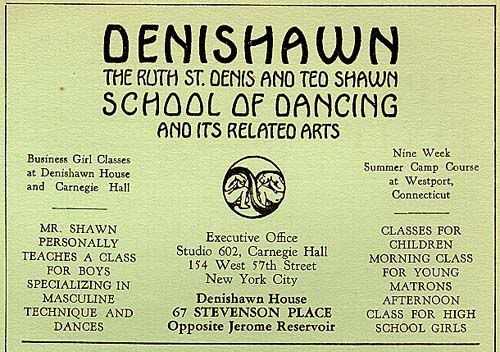
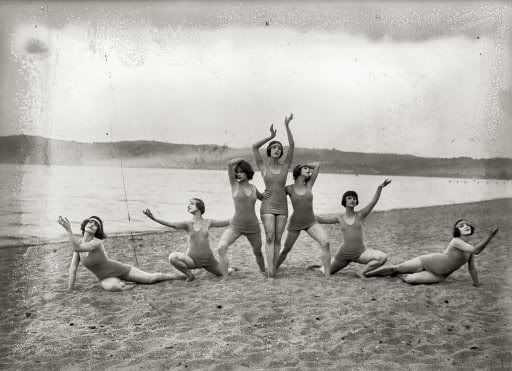
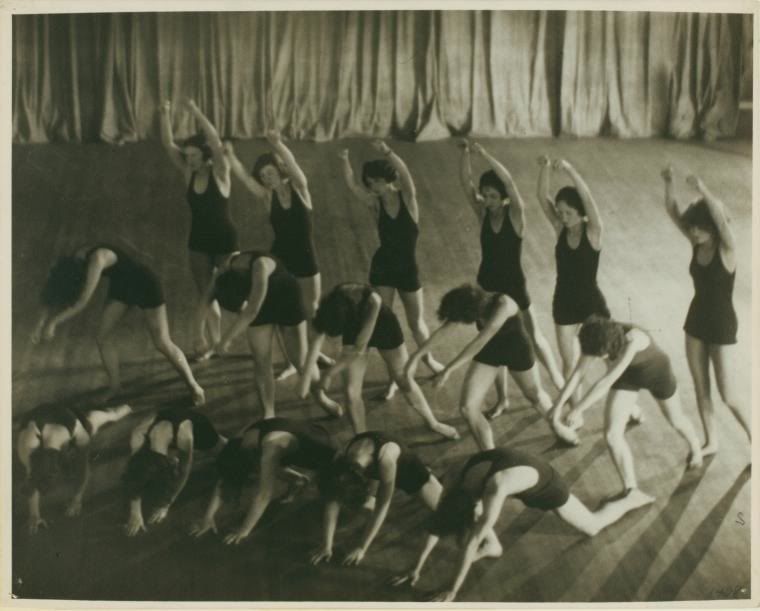
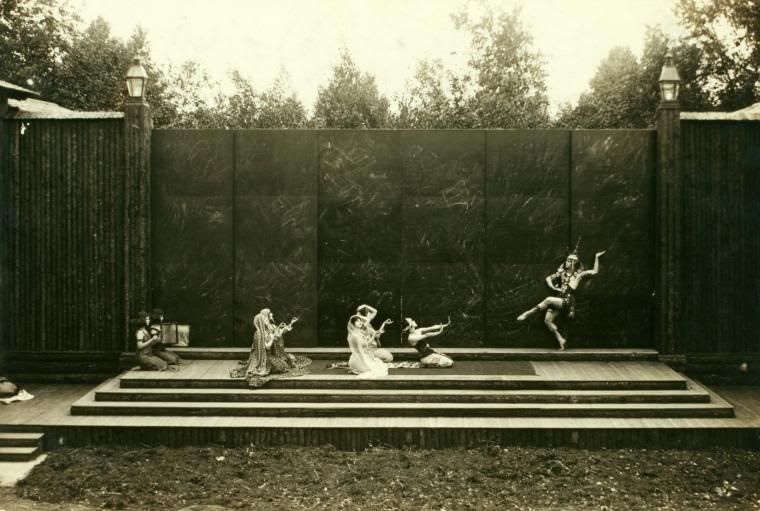
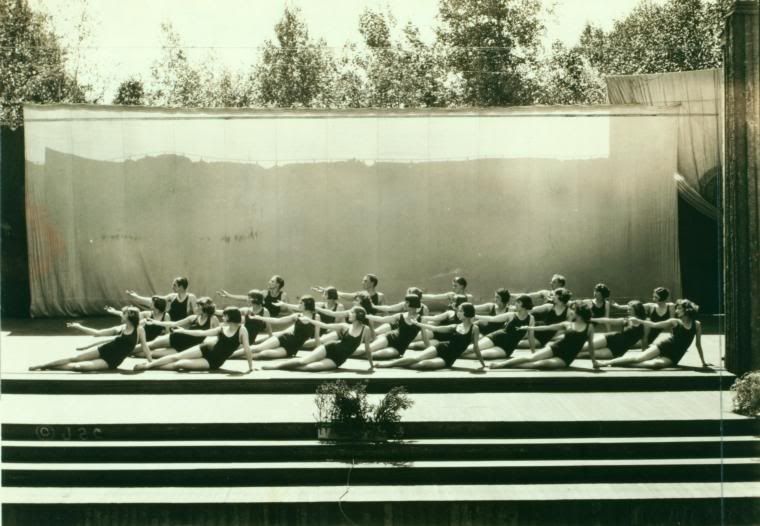
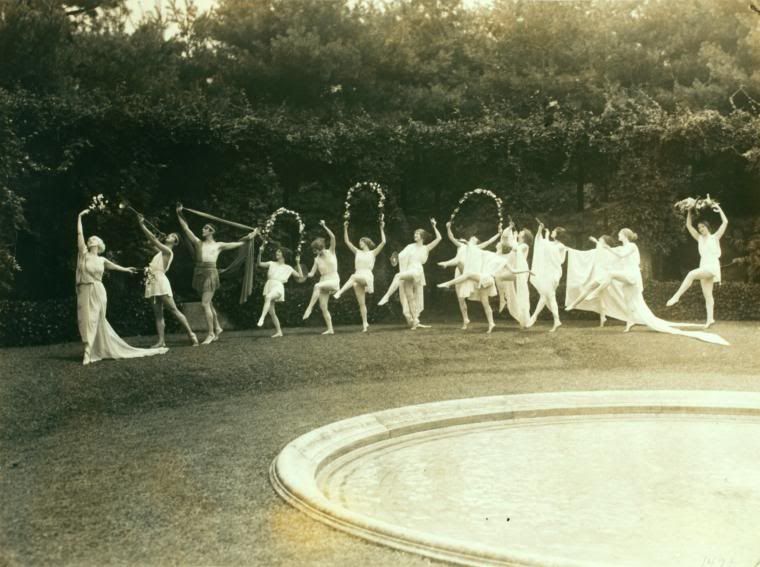
Denishawn and Modern Dance.


C.o. A Secret Forest: The Birth of Modern Dance

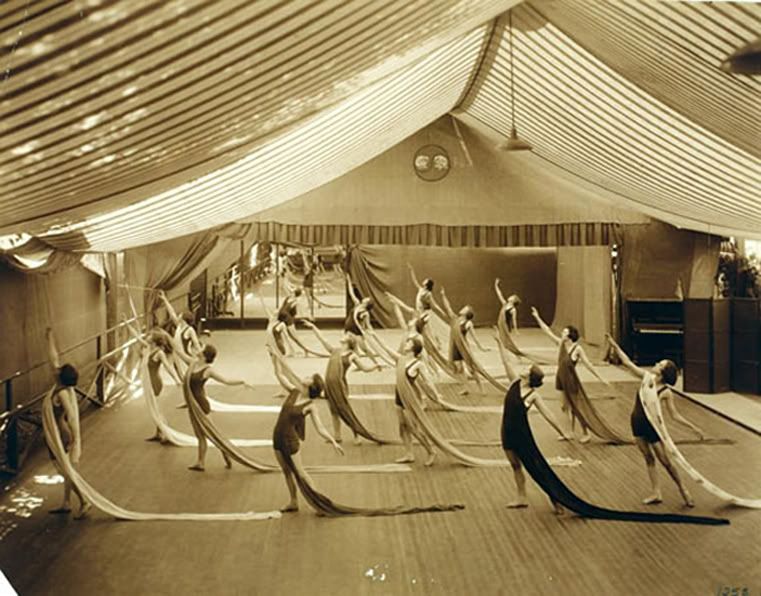
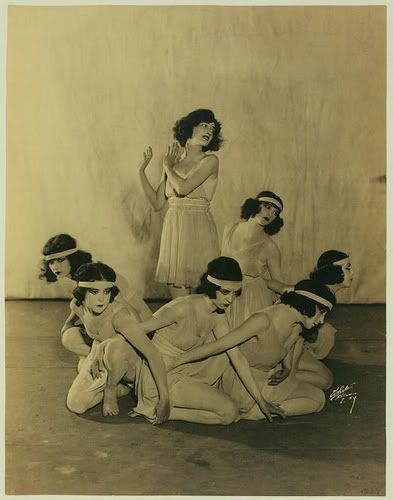
I came across the blog linked above shortly after I'd finished Barry Paris's biography of 1920s film savant Louise Brooks, and though I didn't learn any new details about the Denishawn Company for Modern Dance that she joined at a meager 15, I did love that it has a complete collection of photography from that period of her life.

Doris Humphrey (standing) and directly to the right is Louise.


It's been a few months since I finished Paris's bio, and from time to time I still think about how much I relate to Louise when it comes to our passion for modern dance. Starting when I was only 9, I danced for 10 years at a studio that concentrated heavily on modern and even took a course on Isadora Duncan's techniques through intensive core work, contraction, and continuous movement. Denishawn, started by Louise's mentors Ruth St. Denis and Ted Shawn, esteemed many of the same techniques as Duncan and may have even pioneered them on the public stage more successfully than she. The company heralded beautiful, fluid movement unlike any other.

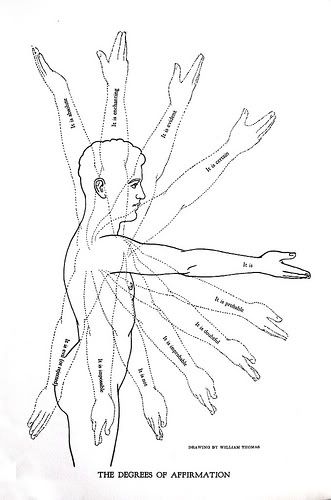
The "motivational science of movement," as explained by Barry Paris in his biography, was a theory belonging to French philosopher Francois Delsarte (1811-1871) and one that Ted Shawn closely emulated in his choreographing practices. According to Paris, Delsarte "correlated every human movement to an emotional state. His tenet was that movement expresses emotion much more viscerally and directly than speech; that, in fact, it is emotion which produces body movement in the first place."


'Degrees' from top to bottom:

It is absolute
It is enchanting
It is evident
It is certain
It is
It is probable
It is doubtful
It is improbable
It is not
It is impossible
It is evil (or rejected)

Like Louise, I identified with the art form and fell in love with it but had a hard time wholly understanding it. Louise had a strained relationship with Shawn and St. Denis and felt that she continually fell short of their expectations. She resorted to performing in a chorus line with Ziegfeld's Follies for better pay but was never creatively fulfilled in her dancing ever again. I, too, felt that I often fell short of my choreographers' expectations and decided before I'd graduated high school that I would never be good enough to try to make it in the dancing world.

That doesn't mean, however, that it isn't still one of my most beloved passions. And I miss it.

At the end of her life, Louise said that she considered dancing her greatest love, more so than either acting or writing (both of which brought her greater fame and success). I'll be honest, professional film acting and/or creative writing are two of my other biggest dreams, but now that I'm at a crossroads where deciding on one passion and pursuing it is an absolute necessity, I'm confused by a woman who admitted that her greatest fulfillment came from dance, a professional ambition that ended when she was just 17.

My point in bringing this up is not that I'm convinced I've missed some sort of calling in a professional dance career; it's more that I don't want to miss any kind of future opportunities God has for me by chasing a dream that could very well end up being less fulfilling than I'd imagined.

That being said, I do sometimes forget about the amount of time and energy that I poured into modern dance--an extremely complex (both emotionally and physically) form of movement for such a young girl--and I'm sure I never fully grasped its precepts, especially those borrowed from Delsarte. I think I'm finally to the age where I can appreciate the native culture, tradition, and emotional zeal that modern dance represents, but instead of pick it up again, I've ironically put all of my current dancing energy into its antithesis: classical ballet. I'm in a production of Phantom of the Opera at Starlight Theater and have worked very hard for the last three months to perfect only a few simple moves on pointe. It's been a wonderful accomplishment proving to myself that I can actually perform such a difficult style, but like Louise's experience with the Follies, I feel that my true devotion belongs to a much different kind of dance.

I miss the freedom, the bare feet, the flexed feet, the heaviness, the stark contrasts in dynamic (ups and downs, ins and outs), the close connection to easy respiration, the core concentration and the trust I come to have in my core to control all movement.

I miss letting down my hair from a strict bun and rushing into a free dance only to fall to the floor with arms outstretched.

I miss the friction, the turmoil, the risk...

the bare honesty that ensues.

Louise knew all of this and lived her life as a metaphor in similar form.

I think that's why she considered herself foremost a dancer, and I think it's why I do too--not because it's what I do best, but because it's when I feel the most.

Friday, June 24, 2011

Svenska Summer.


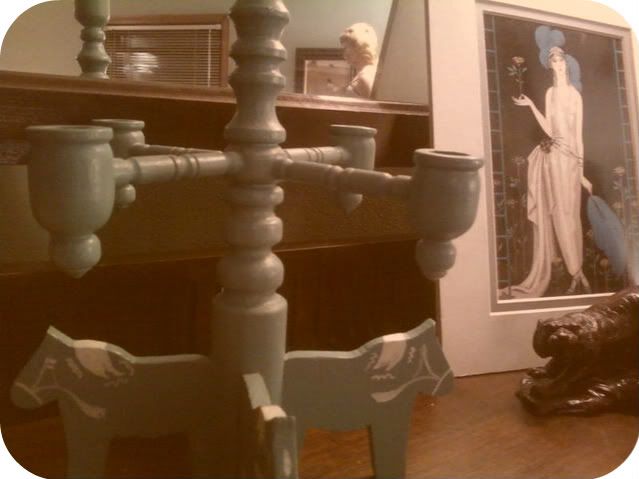
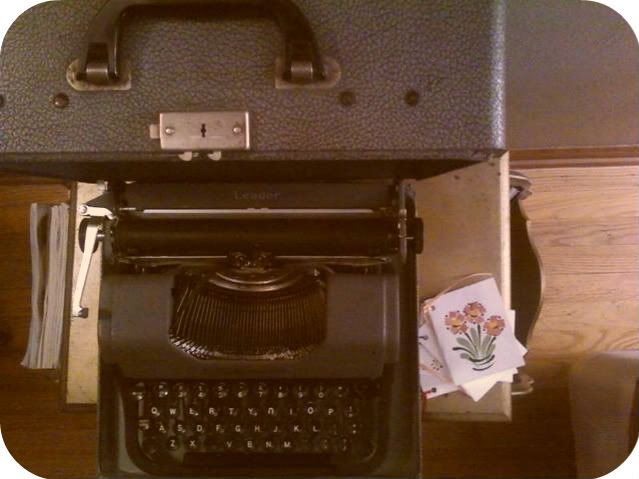
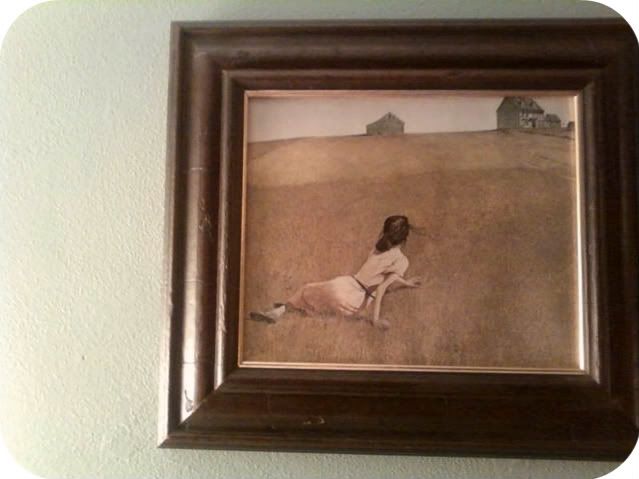
I feel that summer has officially started now that the Swedish Midsommer Fest here in Rockford has come and past--a day full of Swedish pancakes, ware, strawberries and ice cream, meatballs, flower crowns, and the sifting through of antiques at MorMor's Attic where I found a Dala horse candle holder, water color gift tags, a typewriter, AND an Andrew Wyeth painting for a grand total of $30.


$5...and it still works!


"Christina's World" 1948


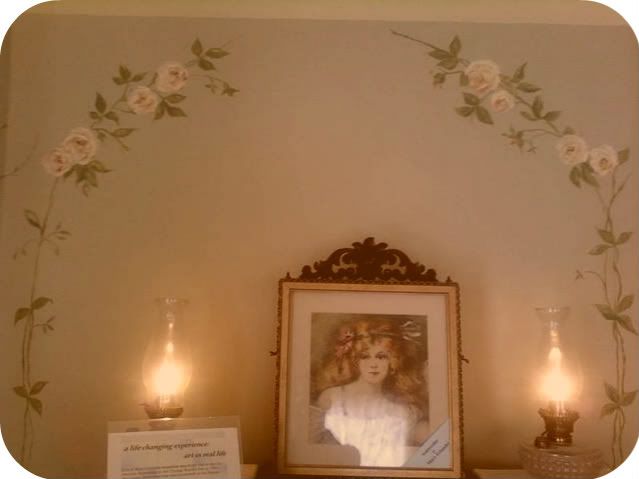
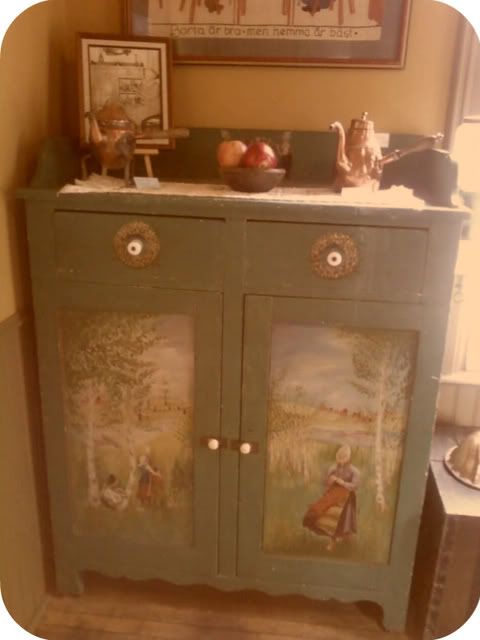
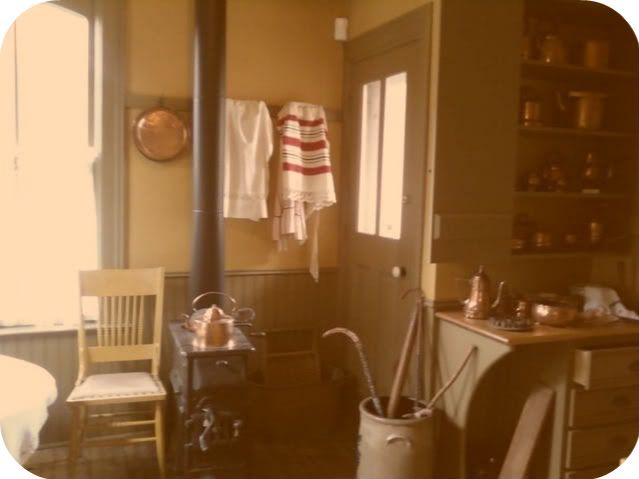
The best part of the day was wandering around the John Erlander Home Museum with my dad for the first time since I'd started going to the Fest a few years back. Circa 1850, it's one of the oldest and best refurbished Swedish homes in the area with all original craftsmanship, painting, and Swedish decor to boast.

[Think color-block wood floors, hand-crocheted afghans, hand-carved mahogany desks and chests, hand-painted stencil and gild work around the top borders of walls, an antique coffee grinder in a miniature kitchen with a wood burning stove...sigh.]


"To travel is good, but home is best."


This grinder was my favorite. They used to mix an egg in with their fresh grounds for extra flavor before they cooked it on a stove. Strange, but I cannot wait to try it. My dad said egg coffee is excellent.


Ironically, I just painted my bedroom walls a light shade of sea foam green and found that the exact same color appeared everywhere in the museum home: that chest in the kitchen, the walls, the knick-knackery. My dad said that at least I come by my Swede roots honestly.

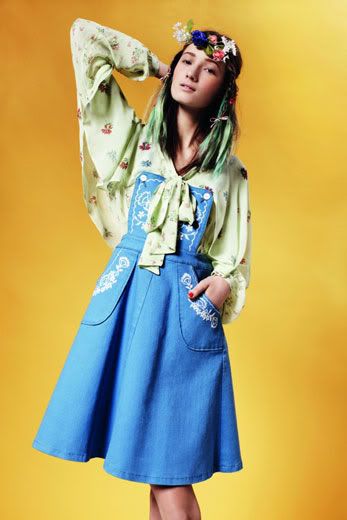
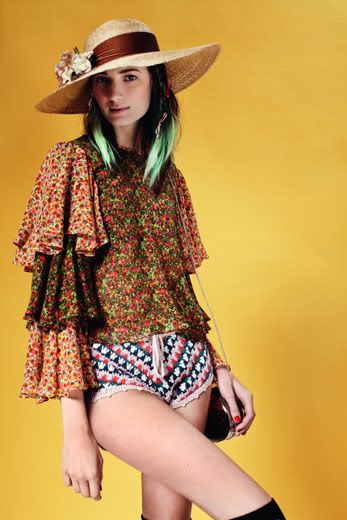
Having been so inspired by the home's dainty attention to detail and since I haven't blogged in a long while, I'm dedicating my first to some flowy, flowery, Svenska-inspired fashion and music.

Var så god.

[You're welcome.]


"Come Rain, Come Sunshine"
by Swedish band Pallers


Topshop's Swedish Summer Collection


Sunday, January 16, 2011